
What Are Snapchat Planets?
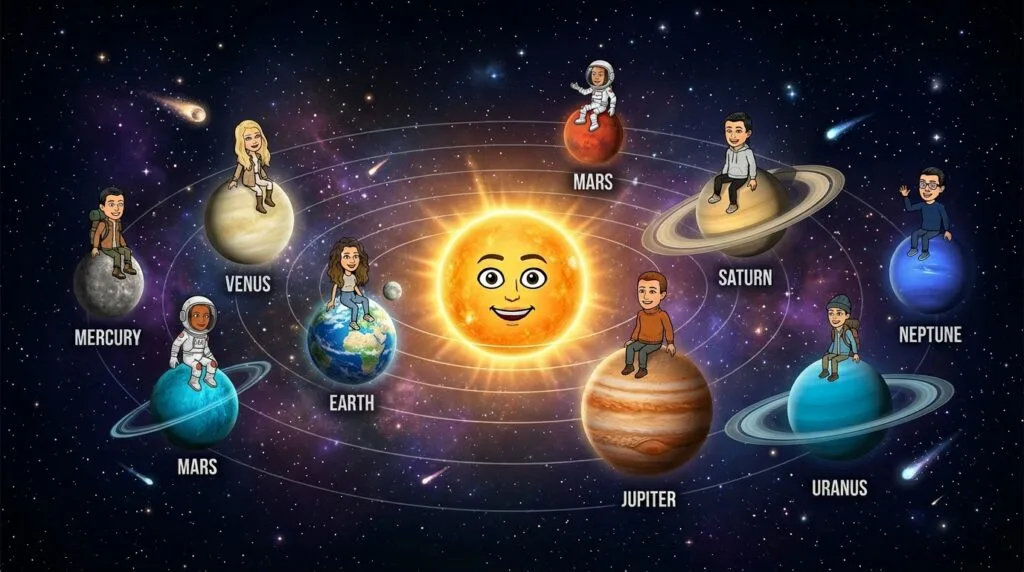
Snapchat Planets – officially called the Friend Solar System – is a premium feature available exclusively to Snapchat+ subscribers. Launched as part of the Snapchat Plus subscription tier, this feature visualizes your closest friendships using a mini solar system model inspired by our real solar system.
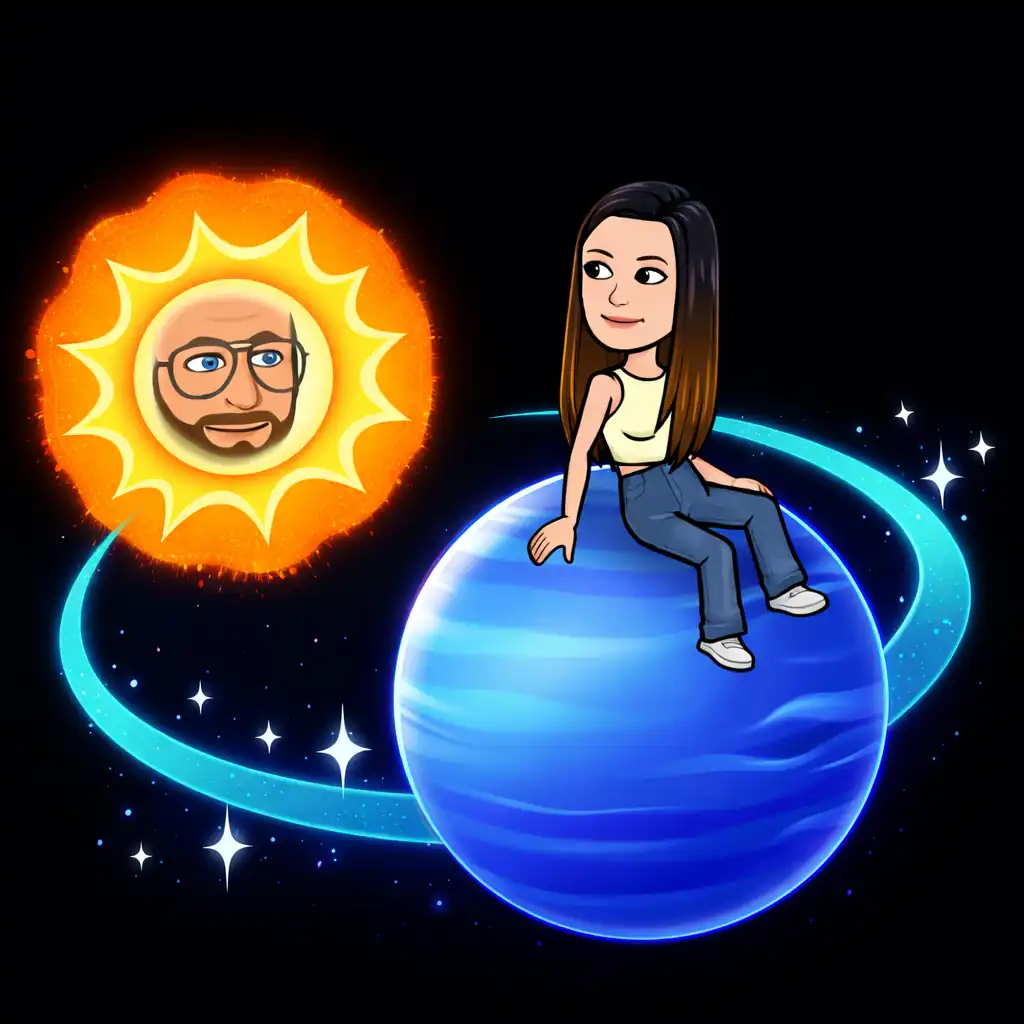
In this system, you are the Sun, and your top 8 best friends are represented as the 8 planets — Mercury through Neptune. The closer a planet is to the Sun in the real solar system, the more that friendship is valued in your Snapchat universe. Mercury, the closest planet, represents your absolute best friend. Neptune, the farthest, represents your 8th most interacted-with friend.
The snap planet system is not just a cosmetic feature. It is built on a real algorithm that tracks your snaps, chats, streaks, story reactions, and engagement frequency to determine where each friend falls in your orbit.
Important: The Friend Solar System feature is off by default for new Snapchat+ subscribers. You must manually enable it from your Snapchat+ feature management page before you or your friends can see planet rankings.
How the Snapchat Friend Solar System Works
Understanding the snap solar system is straightforward once you think of it like real space — you are at the center, and your friends revolve around you depending on how much time and attention you give each other.
Here is how the entire system functions step by step:
- Subscribe to Snapchat+ — This feature is locked behind the paid Snapchat Plus subscription. Free users cannot access or view the Snap Planet system.
- Enable the Feature — Go to your Snapchat+ settings and toggle on the Friend Solar System. It does not activate automatically.
- Snapchat Tracks Interaction — The app continuously monitors your snap frequency, chat activity, streak maintenance, story reactions, and reply speed with each friend.
- Planets Are Auto-Assigned — Based on this data, Snapchat assigns one of the 8 planets to each of your top 8 friends. Rankings update regularly — sometimes daily, sometimes weekly.
- Visit a Friend’s Profile — On a friend’s profile, you will see either a “Best Friends” badge (gold-ringed) or a “Friends” badge. Tapping on it reveals which planet you are in their solar system.
- Rankings Are Private & Relative — Only you can see your own planet rankings. Your position in a friend’s solar system may be completely different from their position in yours.
The system is dynamic. If you start snapping someone more frequently, you will move closer toward Mercury. If you go quiet, you might drift toward Neptune. It functions like a live friendship tracker that updates based on your recent behavior.
Snapchat Planets Order — All 8 Planets Explained
The Snapchat planets in order follow the exact same sequence as our real solar system — Mercury to Neptune. Below is the complete Snapchat planet order with their visual descriptions, friendship rank, and what they represent:
#1 Best Friend
1. Mercury Planet — Your Closest Best Friend

Visual: A bright red planet surrounded by 5 red floating hearts and twinkling stars. Your friend’s Bitmoji sits on top, facing you with a big smile.
Meaning: Mercury is your absolute number one on Snapchat. This is the person you snap and chat with the most, every single day. Your streaks are long, your replies are fast, and your engagement is constant. In the snap solar system, Mercury represents the deepest digital friendship — mutual attention, loyalty, and consistent interaction.
How to reach Mercury: Snap daily, keep streaks alive, reply quickly, and engage with their stories consistently.
#2 Best Friend
2. Venus Planet — Your Emotionally Close Friend
Visual: A warm beige/yellowish planet surrounded by colorful multi-tone hearts in pink, blue, purple, and yellow. Sparkles orbit the planet gently.
Meaning: Venus in the Snapchat planet system represents a very strong emotional bond. This friend may not lead your interaction list, but your communication is steady, heartfelt, and meaningful. You share important moments, vent to each other, and maintain a deep connection. Venus is the emotional BFF of the snap solar system.

#3 Best Friend
3. Earth Planet — Your Reliable Companion

Visual: A warm beige/yellowish planet surrounded by colorful multi-tone hearts in pink, blue, purple, and yellow. Sparkles orbit the planet gently.
Meaning: Venus in the snapchat planet system represents a very strong emotional bond. This friend may not lead your interaction list, but your communication is steady, heartfelt, and meaningful. You share important moments, vent to each other, and maintain a deep connection. Venus is the emotional BFF of the snap solar system.
#4 Best Friend
4. Mars Planet — Your Fun & Energetic Friend
Visual: A vivid red-orange planet with purple and blue hearts, animated sparks, and a playful Bitmoji in a fun pose.
Meaning: Mars on Snapchat represents excitement and energy. This friendship is less about deep conversations and more about fun — memes, jokes, funny snaps, and light-hearted banter. Your Mars friend keeps the mood light and your chat lively. It is an active friendship, just more playful than intense.

#5 Best Friend
5. Jupiter Planet — Your Solid Casual Friend
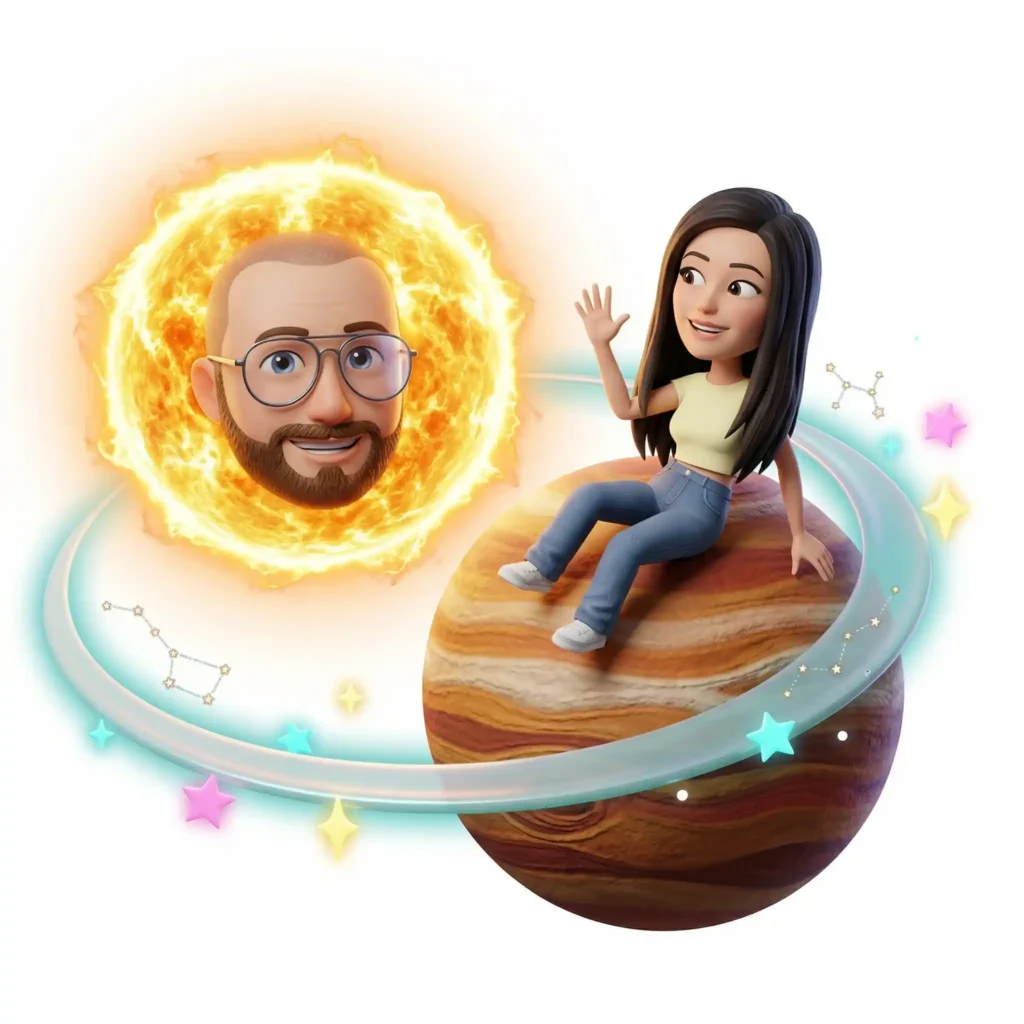
Visual: A large orange planet with pale beige rings slowly rotating. The Bitmoji may appear smaller near the planet’s edge.
Meaning: Jupiter in the Snapchat solar system order represents a reliable but casual connection. You talk occasionally, share some snaps, and check in from time to time. There is no intensity, but the bond is consistent enough to keep this person in your top 8. Jupiter is the friend you trust without needing daily contact.
#6 Best Friend
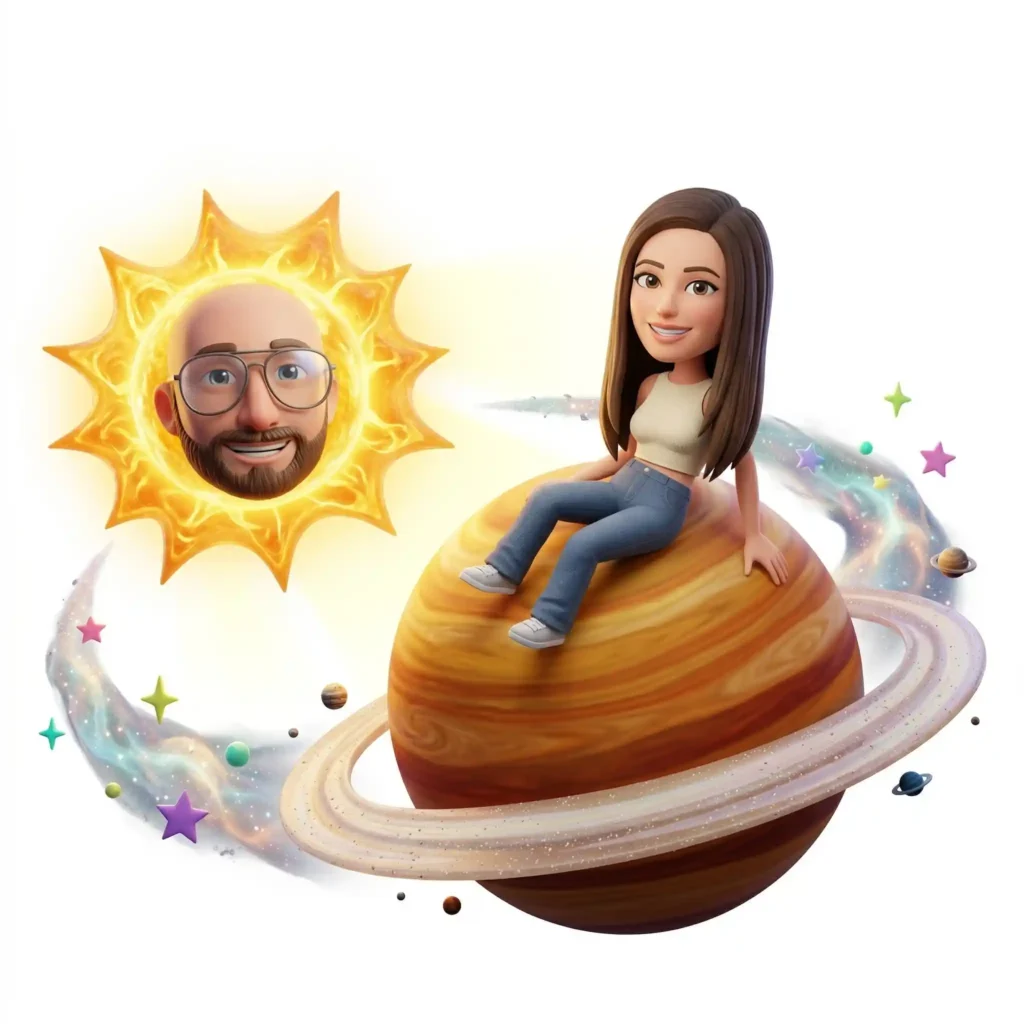
6. Saturn Planet — A Fading Orbit
Visual: A pale yellow planet with a prominent ring of dimmed sparkles. The Bitmoji may appear partially obscured or smaller than in inner planets.
Meaning: Saturn signals a friendship that was once closer but has recently cooled down. Your snaps and chats are less frequent than before. If you recognize someone as your Saturn, it may be time to reconnect and rekindle that friendship before they drift further out into the solar system.
#7 Best Friend
7. Uranus Planet — Rarely in Touch
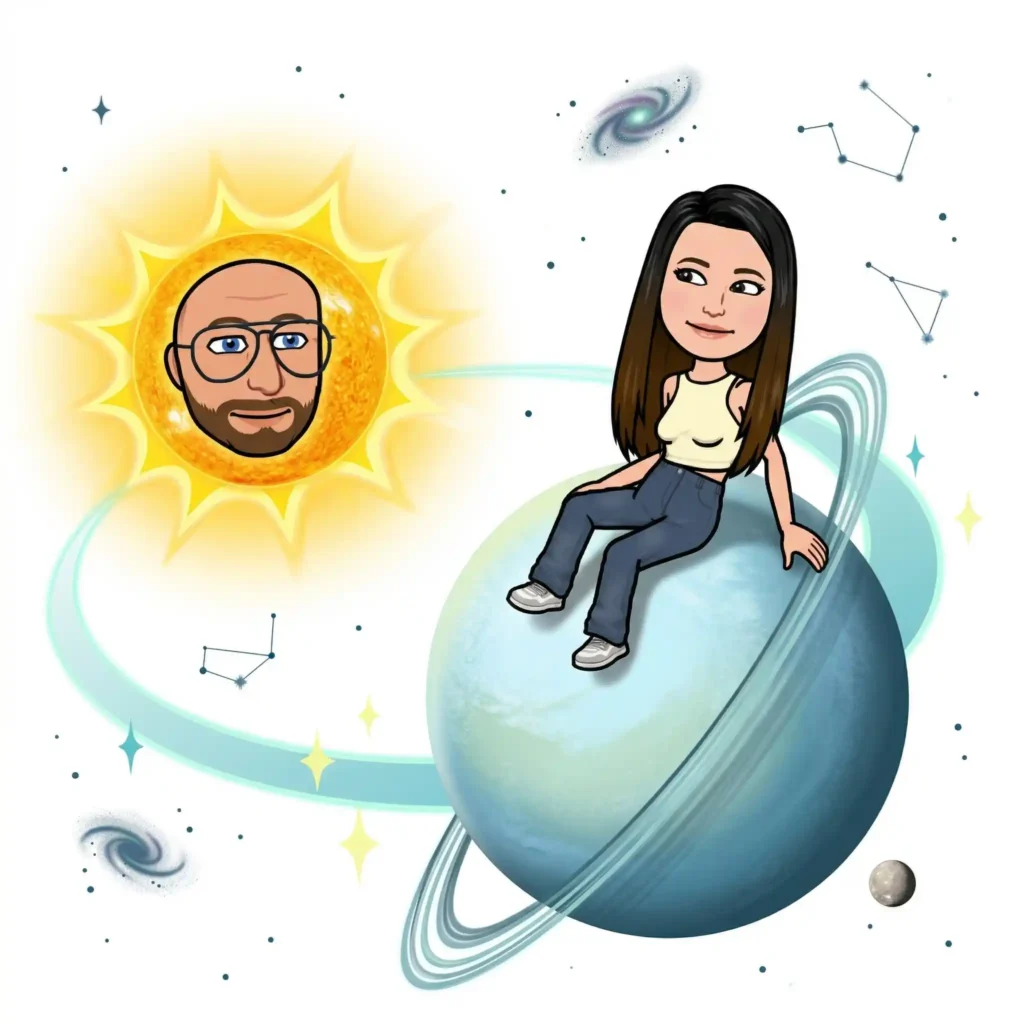
Visual: A muted light blue-green planet with very faint spark trails. The Bitmoji is small and barely visible compared to inner planet icons.
Meaning: Uranus on Snapchat represents a distant friendship with minimal communication. You might interact occasionally. A snap here, a chat there, but nothing consistent. It is not a dead friendship, just one that needs more attention if you want to move it closer to the Sun. Unlike the green dot on Snapchat, which shows recent activity, Uranus reflects your position in a friend’s Best Friends ranking
#8 Best Friend
8. Neptune Planet — The Most Distant Friend
Visual: A deep dark blue planet with subtle glows and no visible sparkles or hearts. The Bitmoji is tiny and notably, it is the only planet where the Bitmoji does not face you — a visual metaphor for emotional distance.
Meaning: Neptune in the snap planet order represents your eighth and most distant friend in the solar system. Interaction is rare — occasional snaps or Snapchat story views only. While they are still in your top 8, Neptune is a signal that this friendship needs nurturing or it may fall off your best friends list entirely.
Hidden Meanings in the Snapchat Planet Icons
Snapchat’s design team embedded real visual psychology into each planet icon. Here is how to decode them:
| Planet | Color Meaning | Heart/Emoji Meaning | Bitmoji Position |
| Mercury | Red = Passion & intensity | 5 red hearts = top-tier love | Faces you directly |
| Venus | Warm beige = Emotional warmth | Multi-color hearts = diverse bond | Leans toward you |
| Earth | Blue-green = Stability & life | Red hearts + stars = grounded love | Stands confidently |
| Mars | Red-orange = Energy & fire | Blue & purple = playful vibes | Fun pose |
| Jupiter | Orange = Warm but casual | No hearts = friendly, not deep | Small, relaxed |
| Saturn | Pale yellow = Fading warmth | Dimmed sparkles = reduced energy | Partially obscured |
| Uranus | Blue-green = Cool distance | Faint trails = weak signals | Barely visible |
| Neptune | Dark blue = Cold distance | None = disconnection | Faces away from you |
The progression from warm reds and pinks to cold blues is intentional — it mirrors both the physical distances in our solar system and the emotional temperature of your friendships.
Best Friends Badge vs Friends Badge — What’s the Difference?
When you visit a friend’s profile on Snapchat+, you will see one of two badges. Understanding the difference is key to reading the snap planet system correctly:
| Badge | What It Means | Planet Visible? |
| Best Friends (Gold Ring) | You are both in each other’s top 8 best friends list | Yes — tap to see your planet in their system |
| Friends (No Gold Ring) | You are in their top 8 but they are not in yours | Yes — but asymmetrical ranking |
| No Badge | Neither of you is in the other’s top 8 | No planet shown |
An important thing to understand: your planet in their system has nothing to do with their planet in your system. You could be their Mercury while they are your Jupiter — the system calculates both directions independently based on each user’s interaction data.
How to Check Your Planet in a Friend’s Solar System
Checking your snap planet position is simple. Follow these steps:
- Open the Snapchat app on your phone.
- Go to your friend’s profile page (tap their name in chats or search for them).
- Look for the Best Friends or Friends badge below their name.
- Tap the badge — a screen will appear showing your planet in their solar system.
- Tap the planet icon to read a short description of what it means.
Pro Tip: The planet shown is YOUR position in THEIR solar system — not how you rank them. To see how you rank your friend, check your own profile interactions from their side by asking them to share their planet view with you.
How to Improve Your Snapchat Planet Ranking
Want to move from Neptune to Mercury in someone’s snap solar system? The algorithm responds to specific behaviors. Here is what actually moves the needle:
1. Send Daily Snaps (Photos & Videos)
Snap frequency is the biggest factor. Send actual photo and video snaps every day — not just text messages. Video snaps carry more algorithmic weight than photos, and both count more than plain chat messages.
2. Keep Your Streaks Alive
A long, consistent Snapstreak signals to the algorithm that your friendship is active and committed. Every day you maintain a streak boosts your closeness score with that person.
3. Have Real Conversations in Chat
Regular back-and-forth conversations in direct messages show the algorithm that your connection is genuine and two-sided. Short daily check-ins are better than long occasional chats.
4. React to Their Stories
Story reactions are quick but effective engagement signals. Even a simple Snapchat emoji reaction on their story counts as meaningful interaction and nudges your rank upward.
5. Reply Quickly
Reply speed is an underrated factor. Fast replies signal to Snapchat that you are genuinely invested in the conversation. Consistently ignoring or delaying replies weakens your position.
6. Avoid Over-Relying on Group Snaps
Group snaps contribute very little to individual friendship rankings. The algorithm prioritizes one-on-one interactions — private snaps and direct chats matter far more than mass-sending to groups.
7. Engage Consistently Over Time
Spamming snaps for a week and then going silent will not sustain your rank. The algorithm rewards sustained, regular engagement over time — not short bursts of activity.
How to Enable or Disable the Snapchat Friend Solar System
The feature is off by default for new subscribers. Here is how to turn it on or off:
- Open Snapchat and tap your Bitmoji/profile icon in the top-left corner.
- Tap the Snapchat+ star badge on your profile.
- Scroll to find “Friend Solar System” in the features list.
- Toggle it ON to activate planets, or OFF to hide them.
When disabled, neither you nor your friends will see any planet rankings. You can toggle it back on at any time without losing your existing ranking data.
What is Snapchat+ and How to Subscribe
Snapchat+ is Snapchat’s premium paid subscription that unlocks a set of exclusive features unavailable to regular users. The Friend Solar System (Snapchat Planets) is one of its flagship features.
Key Snapchat+ Features (Beyond Planets)
- Custom App Icons & Chat Themes — Personalize your Snapchat experience visually.
- Pin Your #1 Best Friend — Keep your top friend at the top of your chat list.
- Story Rewatch Count — See how many times someone rewatched your Snapchat story
- Snapstreak Tools — Reminders and tools to maintain streaks.
- Ghost Trails on Snap Map — See where your friends have recently been active.
- Exclusive Bitmoji Styles — Unique outfits and customizations.
- Early Access to New Features — Beta access to experimental tools before public release.
- Galaxy Badges — A newer feature being tested that rewards consistent interaction.
Snapchat+ Pricing (2026)
| Plan | Price | Best For |
| Monthly | ~$3.99/month | Trying it out short-term |
| Yearly | ~$29.99/year (~20–30% off) | Long-term subscribers |
Prices may vary by country due to regional taxes and App Store/Google Play policies.
How to Subscribe on iPhone
- Open Snapchat and tap your profile icon (top-left).
- Tap the gear icon to open Settings.
- Scroll to “Snapchat+” and tap it.
- Choose Monthly or Yearly plan.
- Confirm via Apple Pay / App Store billing.
How to Subscribe on Android
- Open Snapchat and tap your profile icon.
- Go to Settings (gear icon).
- Find and tap “Snapchat+”.
- Select your preferred plan.
- Confirm via Google Play billing.
How to Cancel Snapchat+
iPhone: App Store → Profile → Subscriptions → Snapchat+ → Cancel Subscription.
Android: Google Play → Profile → Payments & Subscriptions → Subscriptions → Snapchat+ → Cancel.
After cancellation, your benefits remain active until the current billing period ends.
Who Can See Your Snapchat Planets?
Privacy is a core design principle of the Snap Planet system. Here is exactly who sees what:
- Only you can see your own planet rankings — your friends do not know which planet they are on your list unless you tell them.
- You can see your position in a friend’s solar system only if they are a Snapchat+ subscriber and have the feature enabled.
- Disabling the feature hides your planet data from everyone, including yourself.
- Snapchat does not expose your private messages, photos, or chat content through this feature — it only calculates interaction frequency, not content.
- The feature is available on Android and iOS only — not on desktop or web versions of Snapchat.
Privacy Note: According to Snapchat’s transparency documentation, the planets feature only measures how often you interact — never what you say. Your private conversations remain completely confidential.
Snapchat Planets vs Snap Score vs Streaks — What’s the Difference?
| Feature | What It Measures | Who Sees It | Requires Snapchat+? |
| Snapchat Planets | Friendship closeness & best-friend ranking among top 8 | Only you (one-way) | Yes |
| Snap Score | Overall app activity — total snaps sent and received | You + any friend who views your profile | No |
| Streaks | Daily commitment — consecutive days snapping with a friend | Both users in the streak | No |
These three systems are related but independent. A long streak with someone does not guarantee they will be your Mercury — it depends on the full picture of your interaction, including chats, story reactions, and snap frequency. Similarly, a high Snap Score reflects your general activity, not your closeness to any specific person.
Common Snapchat Planet Problems and Fixes
| Problem | Likely Cause | Fix |
| Planets not showing on profiles | Feature is toggled off or subscription lapsed | Re-enable in Snapchat+ settings or renew subscription |
| Planet ranking seems wrong or outdated | Algorithm update delay (can take a few days) | Wait 24–72 hours; rankings refresh automatically |
| Frozen or glitchy planet icon | App cache issue | Clear Snapchat app cache and reopen the app |
| No badge visible on friend’s profile | They are not in your top 8, or they disabled the feature | Increase interaction frequency or check if they have Snapchat+ |
| Subscription active but feature not working | Log-in or billing sync issue | Log out and back in; check App Store/Google Play billing status |
| Different planet on Android vs iPhone | App version mismatch | Update Snapchat to the latest version on both devices |
The Psychology Behind Snapchat Planets
The Friend Solar System is not just a fun visual — it is a carefully designed gamification system built on behavioral psychology. Each time a user sees their planet position change (moving from Earth to Venus, for example), it triggers a dopamine response that encourages more interaction.
For Gen Z users especially, the system taps into a deep need for social validation and belonging. Seeing that you are someone’s Mercury is a digital affirmation of closeness. Discovering you have slipped to Neptune can create a motivating urgency to re-engage.
Snapchat intentionally keeps planet rankings private to reduce social comparison anxiety — you see your position in someone’s system, but you cannot compare it publicly with others. This design balances the engagement-driving aspects of gamification with responsible social app practices.
For Parents & Teens: While the feature is designed for fun, some younger users may develop anxiety around their planet rankings — especially if they notice a drop. Snapchat has disabled the feature by default partly for this reason. Encourage balanced use and remind teens that digital interaction frequency does not define the quality of real friendships.
Read About: what do the eyes mean on snapchat story?
What’s New with Snapchat Planets in 2026?
The 2026 update to the Friend Solar System brought several notable improvements:
- Enhanced animations — Planet icons now feature smoother, more detailed motion effects
- Bitmoji reactions — Friends’ Bitmojis on planets now show more expressive poses and reactions
- Refreshed interface — The solar system view has been redesigned for better visual clarity
- Galaxy Badges (in testing) — A new reward system being trialed that may give badges for consistent long-term interaction, adding another layer to friendship recognition
- Expanded regional availability — The feature has expanded to more countries, with localized rollouts continuing throughout 2026
Frequently Asked Questions (FAQs)
Final Thoughts
Snapchat Planets is one of the most creative and emotionally resonant features in social media today. By turning friendship into an interactive solar system, Snapchat has given users a new, visual language for understanding their digital relationships — who they are closest to, who is drifting away, and who deserves more attention.
Whether you are Mercury-close to your best friend or slowly orbiting at Neptune, the Snap Planet system is a reminder that friendships, digital or otherwise, require consistent effort, attention, and genuine connection to thrive.
Use this guide to understand your planet order, improve your rankings where it matters, and most importantly, celebrate the real connections behind every planet in your Snap Solar System. If you’re interested in exploring more Snapchat features, a Snapchat Viewer can also help you better understand story interactions and user activity on the platform.